
Amal hid her bruises behind a forced smile, fearing what people would say, until she saw the fear in her daughter’s eyes. She realized then that her silence was leading to defeat. She decided to leave and began her journey in search of safety and support, replacing fear with action.
Today, Amal is not a victim, but a survivor with a project and an unbroken voice.
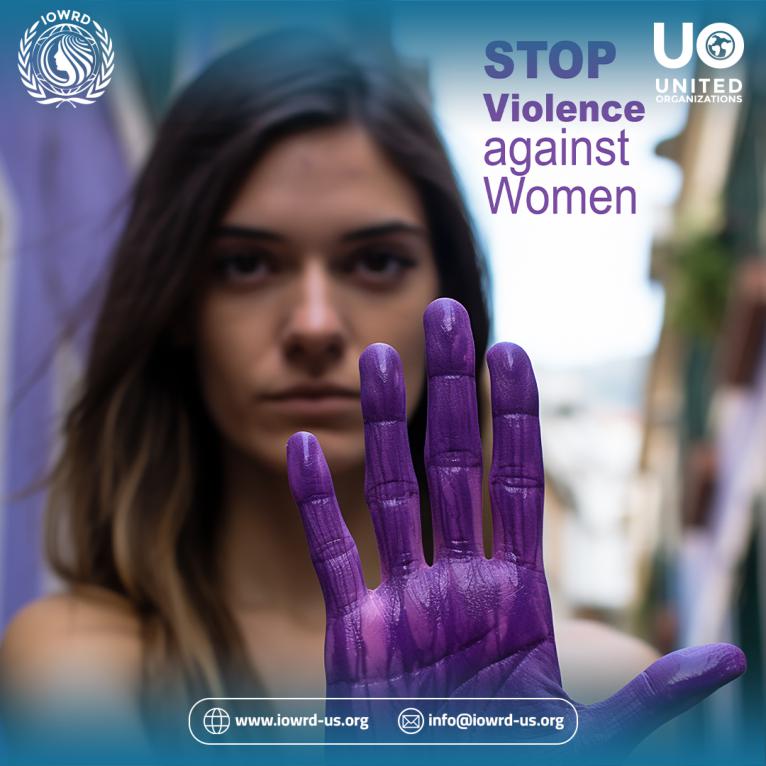
Violence against women is not just a family dispute or a passing incident; it is a silent bleeding in the heart of humanity. Every bruise on a woman’s face is a stain on society’s conscience, and every voice stifled by fear is the loss of a dream that could have changed the world.
The Language of Numbers: The Bitter Truth of Global Statistics
According to reports from the World Health Organization (WHO) and UN Women:
▪️One in three: 35% of women worldwide experience physical or sexual violence in their lifetime.
▪️The Imminent Danger: Most acts of violence are perpetrated by an intimate partner (husband or fiancé).
▪️The Heavy Toll: Every day, more than 137 women are killed worldwide by a family member.
Campaigns That Changed the Course: When Pain Becomes Power
There is a glimmer of hope created by global movements that have succeeded in breaking the silence:
1- The #MeToo movement:
which shattered the walls of fear and enabled millions of women to speak out about their experiences, leading to changes in labor laws in several countries.
2- The 16 Days of Activism campaign:
led annually by the United Nations to raise awareness and link violence against women to human rights in general.
3- The White Scarf campaign:
a global initiative led by men who pledge not to commit or remain silent about violence.
Countering Strategies (A Roadmap to Safety)
Violence cannot be eradicated with a single decision, but rather through a comprehensive system operating simultaneously:
1- Legal Strategy (Zero Tolerance):
Enact comprehensive laws that not only criminalize physical assault, but also encompass psychological, economic (depriving women of their money), and cyber violence.
Establish specialized police units and trained judicial personnel to deal with victims without prejudging them or attempting “forced reconciliation” that returns the victim to her abuser.
2- Economic Empowerment (The Weapon of Independence):
The harsh reality is that many women remain trapped in the cycle of violence because they lack the means to afford basic necessities or alternative shelter. The strategy here relies on supporting small businesses for women and guaranteeing their right to inheritance and employment, enabling them to make the dignified decision to leave.
3- Changing the Mindset (Preventing at the Roots):
Targeting “toxic masculinity” in school curricula and dramas, and replacing it with concepts of partnership and respect. Engaging men and boys as allies in this cause is crucial, because violence begins as an idea before it becomes a stabbing or a slap.
Challenges and Obstacles: Why Does This Bloodshed Continue?
The battle is not easy because the adversary is often an inherited culture or an entire system:
▪️The Culture of “Covering Up” and Blaming the Victim:
The biggest challenge is societal pressure that considers a woman’s complaint a “scandal.” Women are expected to endure for the sake of “the children,” while men are absolved of responsibility, making society a silent accomplice to the crime.
▪️The Gap Between Legal Text and Implementation:
A great law may exist, but in its implementation, women encounter stifling bureaucracy or complexities in proving harm (such as psychological violence), leading them to despair and relinquishing their rights.
▪️Crises and Wars:
In conflict zones and refugee camps, violence against women intensifies as a weapon of war or as a result of dire living conditions, and protection mechanisms become virtually nonexistent, making women the most vulnerable group.
The Role of the International Organization for Women’s Rights
The International Organization for Women’s Rights (IOWRD) acts as a global “safety valve” and a catalyst for change through three main roles:
1- Monitoring and Advocacy Role (High Pressure):
It monitors countries’ compliance with the Convention on the Elimination of All Forms of Discrimination against Women (CEDAW) and issues “shadow” reports that expose what is being kept silent, thus embarrassing negligent governments before the international community and pushing them to amend their legislation.
2- Field Role (Lifeline):
Funding and managing “shelters” that provide immediate protection for survivors.
Providing specialized psychological support to heal shattered spirits and free legal support to claim rights and custody.
3- Awareness and Fundraising Role:
Launching large-scale global campaigns that break taboos and providing grants to small local organizations that understand the specific needs of each community, ensuring that aid reaches the most remote villages and the poorest neighborhoods.
The role of organizations and strategies remains a framework; the true spirit lies in women’s awareness of their right to a dignified life, and in men’s understanding that their strength lies in their support, not their domination.
To every woman reading these lines: You are not broken; you are a fighter.
Remember that strength is not the absence of fear, but facing it.
And to society: Protecting women is not a favor, but a fundamental condition for the survival of a healthy society. The world will not bow in respect to a nation where its women are humiliated.